


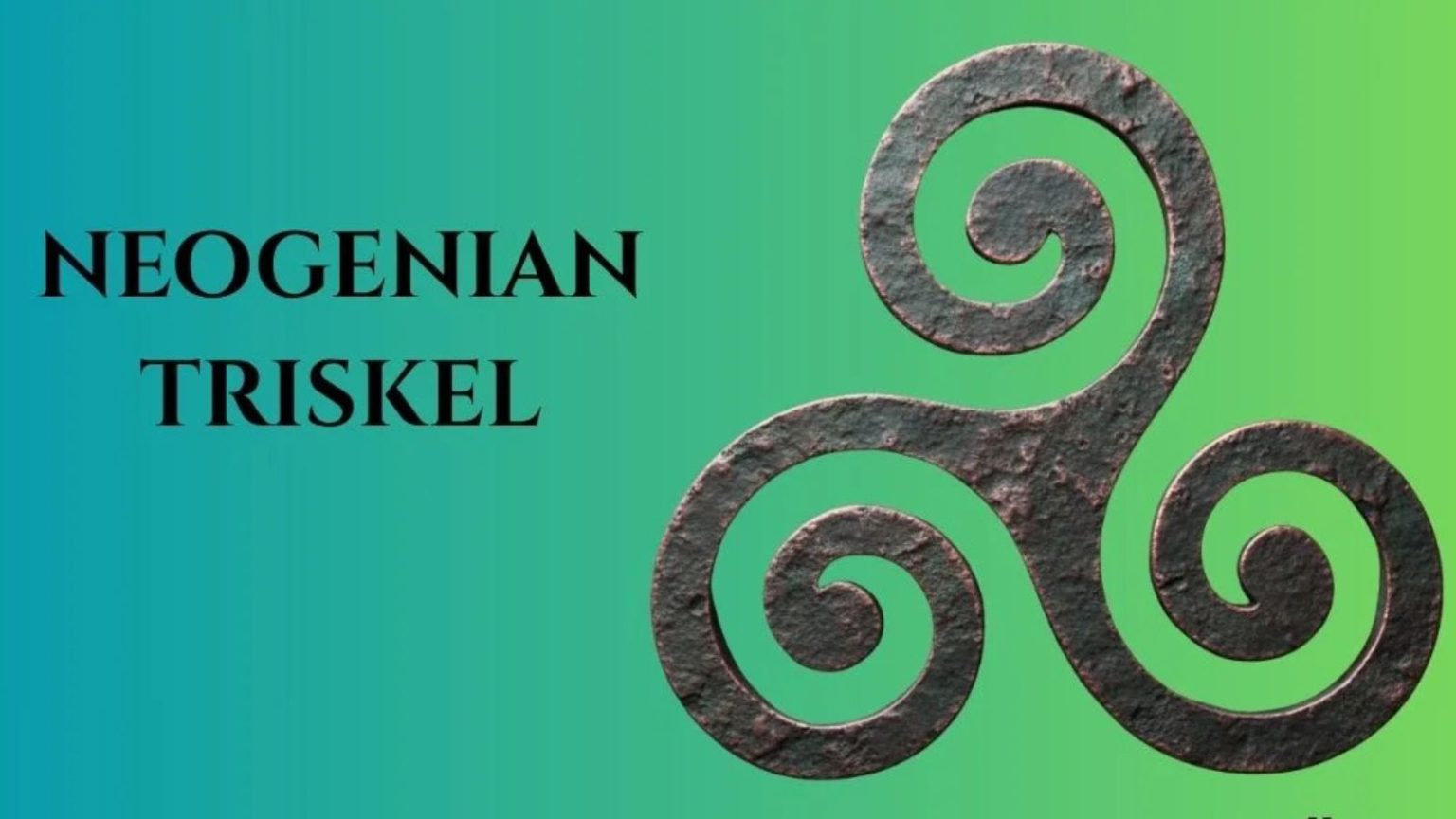
The Neogenian Triskel is more than just a symbol—it’s a bridge between the ancient and the modern, between spiritual wisdom and human progress. With its elegant triple-spiral design, this mysterious emblem has captured the imaginations of historians, spiritual seekers, and philosophers across generations. While rooted in ancient traditions, its reemergence in contemporary thought signals a renewed fascination with balance, transformation, and cyclical evolution.
The term “Neogenian” itself implies a new genesis or rebirth, suggesting that the Triskel has entered a new phase of meaning in today’s world. Whether interpreted through the lens of mysticism, science, or art, the Neogenian Triskel stands as a powerful metaphor for continuity and renewal—a symbol that connects humanity to the eternal flow of creation
- Origins of the Triskel Symbol
The Triskel, also known as the Triskele, is one of the oldest geometric motifs in human history. Its origins trace back thousands of years, appearing in Neolithic carvings, Celtic art, and ancient Mediterranean cultures.
Archaeologists have discovered Triskel patterns on prehistoric stones in Newgrange, Ireland, dating as far back as 3200 BCE. Similar designs also appear in Greek pottery, Sicilian artifacts, and Asian spiritual symbols, pointing to a shared human fascination with triadic balance and motion.
The three spirals of the Triskel were often thought to represent key natural and spiritual triads:
- Life, Death, and Rebirth
- Earth, Sea, and Sky
- Mind, Body, and Spirit
- Past, Present, and Future
For the ancient Celts, the Triskel symbolized energy in motion—a reminder that life itself is cyclical and ever-evolving.
- The Meaning of “Neogenian”
The prefix “Neo-” denotes new, while “Genian” comes from genesis, meaning birth or origin. Together, Neogenian can be interpreted as “of a new birth” or “belonging to a new beginning.”
Thus, the Neogenian Triskel signifies not just the ancient triple spiral, but its rebirth in modern consciousness. It represents humanity’s rediscovery of timeless wisdom in an age dominated by technology and change.
In a broader sense, the Neogenian Triskel invites us to integrate ancient symbolism with modern understanding, merging spirituality, science, and creativity into a unified vision of progress.
- The Symbolism of the Triple Spiral
At its core, the triple spiral design of the Triskel is deeply symbolic. Each arm flows into the next, forming a continuous loop that represents movement and evolution. The spirals rotate outward and inward, signifying both expansion and introspection—the dual forces of growth and reflection that define the human experience.
Here are some of its most profound symbolic interpretations:
- Motion and Progress: The Triskel conveys the idea of perpetual motion—everything in the universe is in a state of transformation.
- Balance of Forces: It embodies harmony between opposing forces, such as light and dark, creation and destruction, chaos and order.
- Spiritual Awakening: The three spirals represent levels of consciousness—physical, mental, and spiritual—united in a continuous cycle.
- Rebirth and Renewal: In the Neogenian interpretation, it reflects humanity’s ongoing rebirth through innovation, awareness, and connection.
- The Triskel Across Cultures
Throughout history, different civilizations have infused the Triskel with unique meanings:
- Celtic Culture: A sacred emblem of Druidic philosophy, representing the triplicity of life and the natural cycles of existence.
- Greek and Sicilian Traditions: The Triskelion (three bent legs in motion) symbolized progress and power, later featured on the flag of Sicily.
- Buddhist and Hindu Symbolism: The spiraling pattern resonates with concepts like samsara—the endless cycle of birth, death, and rebirth.
- Modern Paganism and Wicca: The Triskel represents the interplay of earth, water, and fire—core elements of nature’s equilibrium.
The Neogenian Triskel draws inspiration from all these interpretations, transforming an ancient motif into a modern spiritual and philosophical emblem.
- Esoteric and Spiritual Interpretations
In esoteric traditions, the Triskel is often viewed as a symbol of spiritual ascension. The three spirals represent the journey of the soul through stages of enlightenment, evolving toward unity with the divine source.
The Neogenian Triskel, with its focus on rebirth, embodies the idea that humanity is entering a new spiritual era. It reflects our growing awareness of interconnectedness—between humans, nature, and technology.
For meditation practitioners and energy healers, the Triskel serves as a visual mandala, helping align the mind, body, and spirit. The circular flow of the spirals encourages mindfulness, grounding, and a sense of eternal return.
- The Triskel in Modern Contexts
The resurgence of the Neogenian Triskel in modern art, design, and digital culture highlights its timeless relevance. It appears in logos, jewelry, tattoos, architectural motifs, and even technological interfaces—each adaptation infusing the ancient design with fresh meaning.
In the digital age, the three spirals are often interpreted as:
- Creation, Connection, and Continuity – symbolizing the flow of ideas through networks and innovation.
- Body, Mind, and Machine – expressing the new relationship between humanity and artificial intelligence.
- Past, Present, and Future – embodying the timeless rhythm of progress.
By embracing this modern reinterpretation, the Neogenian Triskel becomes a symbol of balance between heritage and innovation, urging us to move forward while staying rooted in ancient wisdom.
- The Triskel in Art and Design
Artists and designers are particularly drawn to the Triskel for its aesthetic symmetry and deep symbolism. The pattern’s dynamic geometry lends itself beautifully to digital artwork, jewelry, architecture, and branding.
In modern design philosophy, the Neogenian Triskel often represents:
- Sustainability – continuous cycles of creation and renewal.
- Creativity – the harmony between imagination, inspiration, and innovation.
- Unity – the integration of diverse ideas into one cohesive vision.
It’s no wonder that creative professionals see the Triskel as both a visual metaphor and a guiding principle.
- The Enduring Appeal of the Neogenian Triskel
What makes the Neogenian Triskel so compelling is its universal adaptability. It transcends religion, culture, and time, speaking to a fundamental truth: everything in life moves in cycles.
In an era marked by rapid change and uncertainty, the Triskel reminds us that progress doesn’t always mean abandoning the past—it means evolving with it. The spiral teaches patience, resilience, and the beauty of transformation.
Its Neogenian rebirth signals a cultural and spiritual awakening, where ancient wisdom meets modern understanding. It’s a call to reexamine how we view growth—not as a straight line, but as a spiral of continual learning and renewal.
- Conclusion: A Symbol for a New Era
The Neogenian Triskel stands at the crossroads of history and modernity—a timeless emblem redefined for a new generation. It reminds us that every ending is a beginning, every moment is part of a larger cycle, and every individual plays a role in the ongoing evolution of humanity.
In its elegant triple spiral, we see not just the rhythm of the cosmos, but the dance of our own becoming.
As we step into an era of unprecedented change, the Neogenian Triskel offers both a compass and a reflection—guiding us toward balance, renewal, and the eternal flow of life itself.
FAQs
Q1. What does the Neogenian Triskel represent?
It represents motion, balance, and the cyclical nature of existence, with a modern interpretation focusing on rebirth and evolution.
Q2. How old is the Triskel symbol?
The Triskel dates back over 5,000 years, with early examples found in Neolithic and Celtic sites.
Q3. What does “Neogenian” mean?
“Neogenian” comes from “Neo” (new) and “Genian” (birth), meaning new genesis or rebirth.
Q4. Where is the Triskel used today?
It appears in art, spirituality, tattoos, corporate branding, and even digital symbolism.
Q5. Why is the Triskel still relevant today?
Because its message of balance, progress, and interconnectedness resonates strongly in our modern world of transformation and renewal.