


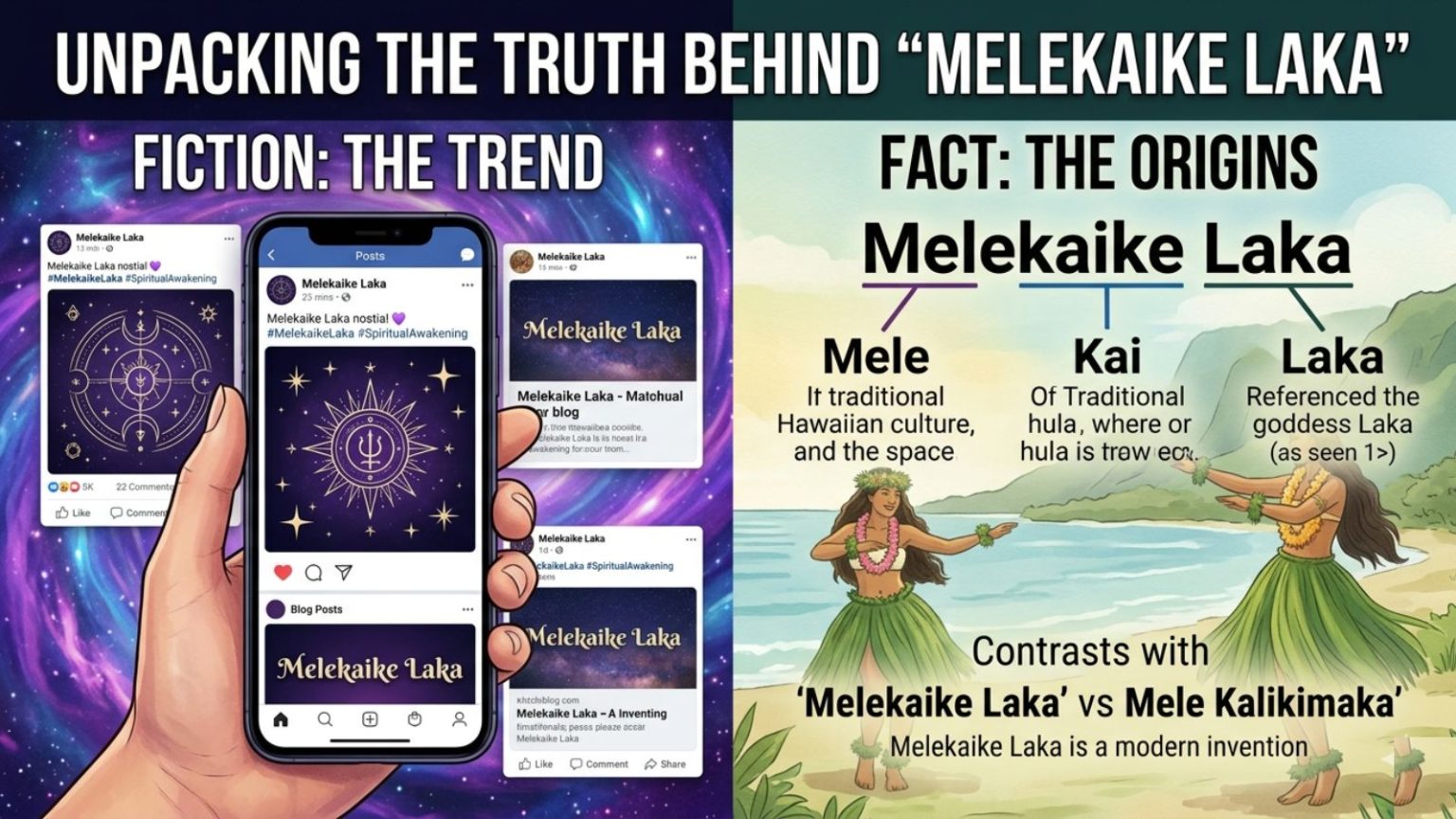
If you’ve recently come across the phrase “Melekaike Laka,” you’re not alone. It has been popping up in search results, social media captions, and even blog posts—often presented as something mysterious, spiritual, or culturally meaningful. But what exactly does it mean? Is it rooted in a real language or tradition, or is it simply a modern internet trend?
Let’s unpack the truth behind “Melekaike Laka,” separating fact from fiction so you can understand where it comes from and why it’s gaining attention.
The Short Answer
“Melekaike Laka” is not a traditional or officially recognized phrase in any established language. Most evidence suggests that it is either:
- A misinterpretation or creative variation of a Hawaiian phrase
- Or a modern, internet-driven expression with loosely assigned meaning
The Hawaiian Connection: Where the Confusion Begins
To understand why “Melekaike Laka” sounds meaningful, we need to look at the Hawaiian language—specifically the well-known phrase:
Mele Kalikimaka
This phrase means “Merry Christmas” in Hawaiian and became widely recognized through music and pop culture. Because Hawaiian words often adapt English sounds into softer syllables, “Merry Christmas” transforms into “Mele Kalikimaka.”
Now here’s where things get interesting:
- “Melekaike Laka” sounds similar in rhythm and structure
- It appears to be a misheard, misspelled, or stylized version
- Over time, people began treating it as its own phrase
This kind of linguistic mutation is common online, where phrases evolve quickly through memes, reposts, and reinterpretations.
Does “Melekaike Laka” Have a Real Meaning?
Not officially
There is no verified dictionary definition or linguistic record of “Melekaike Laka” in Hawaiian or any other recognized language.
But parts of it sound real
Some elements resemble actual Hawaiian words:
- “Mele” → means song or chant
- “Laka” → refers to a Hawaiian goddess associated with hula and creativity
However, combining them into “Melekaike Laka” does not form a grammatically correct or traditional phrase.
So while it sounds authentic, it doesn’t hold a true linguistic meaning.
The Rise of “Melekaike Laka” Online
The internet has a way of turning almost anything into a trend, and “Melekaike Laka” is a perfect example.
Why it went viral
Several factors contribute to its popularity:
1. It sounds exotic and rhythmic
The phrase has a musical, flowing quality that makes it appealing and memorable.
2. It feels meaningful
Even without a clear definition, people assume it carries spiritual or cultural depth.
3. It’s flexible
Unlike real phrases with fixed meanings, this one can be interpreted however people like.
Common Interpretations (Unofficial)
Because there’s no fixed definition, people have assigned their own meanings to “Melekaike Laka,” including:
- A symbol of peace and calm
- A phrase representing positive energy
- A kind of meditative chant
- A general expression of happiness or good vibes
These meanings are not historically accurate, but they reflect how modern users interact with the phrase.
Trend or Tradition?
Let’s address the main question directly:
Not a traditional phrase
There’s no evidence that “Melekaike Laka” exists in authentic Hawaiian language or culture.
Definitely a trend
It fits the pattern of many viral phrases:
- Easy to say
- Sounds meaningful
- Spread through social media
- Gains attention through curiosity
So the honest answer is:
“Melekaike Laka” is a modern trend inspired by Hawaiian-sounding words—not a real traditional expression.
Why Do These Phrases Go Viral?
This isn’t the first time something like this has happened.
The psychology behind it
Curiosity gap
People see an unfamiliar phrase and immediately want to know what it means.
Cultural fascination
Hawaiian and Polynesian languages are often associated with:
- Nature
- Spirituality
- Peaceful living
So anything that sounds similar gains interest.
Social sharing
Once a few people start using it, others copy it—sometimes without verifying its meaning.
Should You Use “Melekaike Laka”?
That depends on your intent.
It’s fine for:
- Creative writing
- Social media captions
- Artistic or aesthetic content
But be cautious if:
- You’re presenting it as a real cultural term
- You’re using it in educational or professional content
Misrepresenting it as authentic Hawaiian language could be misleading.
The Importance of Cultural Accuracy
While trends can be fun, it’s important to respect real languages and cultures.
The Hawaiian language has:
- Deep historical roots
- Cultural significance
- Carefully structured grammar
Using made-up or altered phrases as if they’re authentic can unintentionally spread misinformation.
So if you’re interested in Hawaiian culture, it’s better to learn and use verified terms rather than viral imitations.
Final Thoughts
“Melekaike Laka” sits at an interesting intersection of language, culture, and internet trends. It sounds meaningful, looks intriguing, and invites curiosity—but ultimately, it doesn’t have a real traditional foundation.
Instead, it’s best understood as:
- A creative remix of Hawaiian-sounding language
- A viral phrase shaped by online culture
- A blank canvas for personal interpretation
So is it real or just a trend?
It’s a trend—with a touch of linguistic inspiration.
FAQ’s About Melekaike Laka
1. Is “Melekaike Laka” a real Hawaiian phrase?
No, it is not officially recognized in the Hawaiian language. It appears to be a modern or altered version of similar-sounding words.
2. What does “Melekaike Laka” actually mean?
There is no fixed meaning. People interpret it in different ways, often associating it with positivity or calmness.
3. Is it related to “Mele Kalikimaka”?
Yes, it likely comes from or was inspired by Mele Kalikimaka, which means “Merry Christmas.”
4. Why is “Melekaike Laka” trending?
It’s gaining popularity due to social media, curiosity, and its appealing sound, which makes it feel meaningful even without a clear definition.
5. Can I use “Melekaike Laka” in content?
Yes, but it’s best to treat it as a creative or informal phrase—not as an authentic cultural or linguistic term.