




Stuck choosing an expository essay topic? This list of expository essay topics for 2026 gives you 150 ready-to-use expository essay ideas, each with a clear angle and the explaining question your essay should answer. Pick one, plan it, and start writing — no more staring at a blank page.
What Is an Expository Essay?
An expository essay explains, informs and clarifies. It answers a how, why or what question with facts, examples and clear reasoning. It does not argue a position or try to persuade the reader — that is the job of a persuasive or argumentative essay. A good expository essay leaves the reader understanding something better than they did before they started reading.
That is why the topics below are all framed as explaining questions. Instead of “Should schools ban phones?”, you will find “How do smartphones affect students’ attention in class?” — the first asks for an opinion, the second asks for an explanation. Keep that distinction in mind and your essay will stay on track.
How to Use This List
- Scan the categories and mark three or four topics that interest you.
- Read the angle and the explaining question for each one — they tell you exactly what your essay needs to cover.
- Pick the one you can explain best, with examples you already know or can research quickly.
- Turn the explaining question into a thesis (see the planning section near the end of this article) and build your outline around it.
The 5 Types of Expository Essay
Most expository essay prompts fall into one of five types. Knowing which type you are writing makes planning much easier.
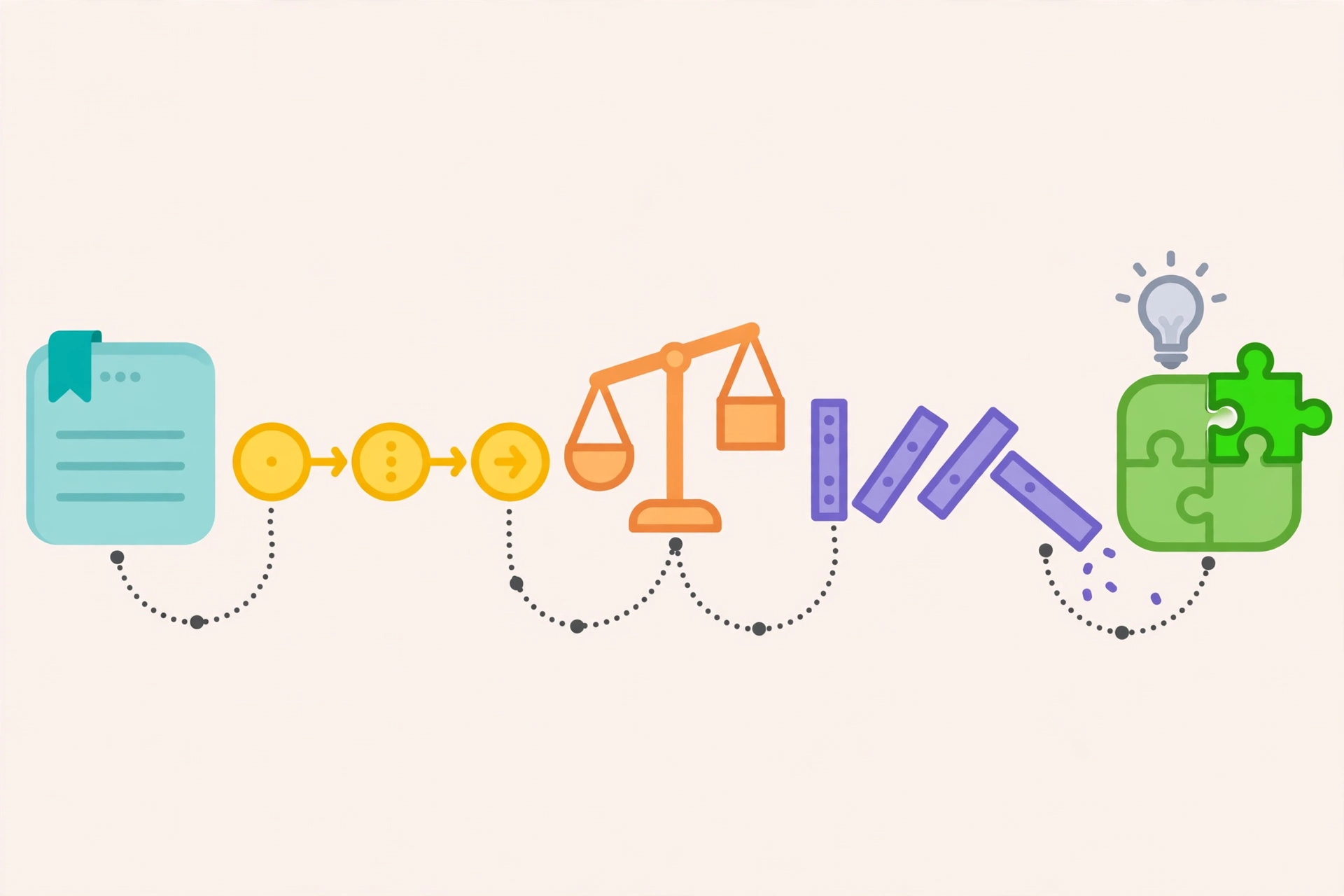
- Definition essays explain what something is. Example: what counts as artificial intelligence, and where the boundary lies.
- Process (how-to) essays explain how something works or how to do it, step by step. Example: how a bill becomes a law.
- Compare-and-contrast essays explain the similarities and differences between two things. Example: online learning compared with classroom learning.
- Cause-and-effect essays explain why something happens and what follows from it. Example: why sea levels are rising and what that means for coastal cities.
- Problem-and-solution essays explain a problem clearly and then explain possible solutions. Example: how cities can reduce traffic congestion.
The topics below are grouped by subject, and each one leans towards one of these five types — the angle tells you which.
Science & Technology
1. How Photosynthesis Works — Angle: the light and dark reactions in a leaf. Explaining question: How do plants turn sunlight, water and carbon dioxide into food?
2. How Vaccines Train the Immune System — Angle: memory cells and how immunity builds. Explaining question: How does a vaccine teach the body to recognise a disease?
3. What Quantum Computing Is — Angle: qubits versus ordinary bits. Explaining question: How does a quantum computer process information differently from a normal computer?
4. How the Internet Reaches Your Home — Angle: the journey from data centre to router. Explaining question: How does a web page travel across the internet to your screen?
5. Why the Sky Looks Blue — Angle: Rayleigh scattering of sunlight. Explaining question: Why does sunlight scattered by the atmosphere appear blue during the day?
6. How Electric Cars Work — Angle: batteries, motors and regenerative braking. Explaining question: How does an electric car convert stored energy into motion?
7. What Black Holes Are — Angle: gravity, event horizons and what we can observe. Explaining question: What happens to matter and light near a black hole?
8. How GPS Knows Where You Are — Angle: satellites, timing signals and triangulation. Explaining question: How do satellites pinpoint a phone’s location so precisely?
9. Why We Dream — Angle: the main scientific theories of dreaming. Explaining question: What do scientists think dreams do for the brain?
10. How 3D Printing Builds Objects — Angle: layer-by-layer manufacturing. Explaining question: How does a 3D printer turn a digital design into a physical object?
11. What DNA Does in a Cell — Angle: genes, proteins and inheritance. Explaining question: How does DNA store instructions and pass traits to the next generation?
12. How Weather Forecasts Are Made — Angle: satellites, models and probability. Explaining question: How do meteorologists predict the weather days in advance?
13. Why Earthquakes Happen — Angle: tectonic plates and fault lines. Explaining question: What causes the ground to shake during an earthquake?
14. How Artificial Intelligence Learns — Angle: training data and pattern recognition. Explaining question: How does a machine-learning model improve by studying examples?
15. What Happens Inside a Nuclear Power Plant — Angle: fission, heat and turbines. Explaining question: How is energy from splitting atoms turned into electricity?
History & Society
16. How the Printing Press Changed Europe — Angle: cheaper books and the spread of ideas. Explaining question: How did movable type transform reading, religion and science?
17. What Caused the Fall of the Roman Empire — Angle: the main competing explanations. Explaining question: Why did the western Roman Empire collapse?
18. How the Silk Road Connected Continents — Angle: goods, ideas and diseases on the move. Explaining question: How did trade routes link Asia, the Middle East and Europe?
19. Why the Industrial Revolution Began in Britain — Angle: coal, colonies and capital. Explaining question: What conditions made Britain the first industrial nation?
20. How Women Won the Right to Vote — Angle: the suffrage movement’s strategies. Explaining question: How did campaigners turn a radical demand into law?
21. What the Magna Carta Established — Angle: limits on a king’s power. Explaining question: Why does a 1215 document still matter to modern law?
22. How Ancient Egypt Built the Pyramids — Angle: labour, logistics and engineering. Explaining question: How were the pyramids constructed without modern machinery?
23. Why the Berlin Wall Fell — Angle: protests, politics and economics in 1989. Explaining question: What caused the wall to come down after nearly thirty years?
24. How the United Nations Works — Angle: the Security Council, Assembly and agencies. Explaining question: How does the UN make decisions and carry them out?
25. What Life Was Like in a Medieval Town — Angle: work, food, faith and daily routine. Explaining question: How did ordinary people live in a medieval European town?
26. How the Moon Landing Was Achieved — Angle: the Apollo programme’s engineering and planning. Explaining question: How did NASA put astronauts on the Moon in 1969?
27. Why Empires Built Roads — Angle: Rome, Persia and the Inca compared. Explaining question: How did road networks help empires govern vast territories?
28. How Democracy Developed in Ancient Greece — Angle: Athens, assemblies and citizenship. Explaining question: How did Athenian democracy work, and who was left out?
29. What Caused the Great Depression — Angle: the crash, bank failures and global trade. Explaining question: Why did the world economy collapse in the 1930s?
30. How Maps Shaped Exploration — Angle: cartography and the age of discovery. Explaining question: How did better maps change what explorers could attempt?
Everyday Life & How Things Work
31. How a Refrigerator Keeps Food Cold — Angle: the refrigeration cycle. Explaining question: How does a fridge move heat out of its own interior?
32. Why We Yawn — Angle: the main theories, from oxygen to social signalling. Explaining question: What purpose, if any, does yawning serve?
33. How Bridges Stay Up — Angle: compression, tension and design types. Explaining question: How do different bridge designs carry heavy loads across a gap?
34. What Makes Bread Rise — Angle: yeast, gluten and fermentation. Explaining question: How do tiny organisms turn dough into a loaf?
35. How Traffic Lights Are Timed — Angle: sensors, flow and city planning. Explaining question: How do engineers decide when each light turns green?
36. Why We Get Hiccups — Angle: the diaphragm and the reflex arc. Explaining question: What triggers hiccups and why are they so hard to stop?
37. How a Microwave Heats Food — Angle: microwaves and water molecules. Explaining question: Why does a microwave heat food from the inside out?
38. What Happens When You Sleep — Angle: the stages of the sleep cycle. Explaining question: What does the brain do during each stage of sleep?
39. How Passwords Are Stored Safely — Angle: hashing and salting. Explaining question: How do websites keep your password secure even if they are hacked?
40. Why Ice Floats on Water — Angle: the unusual structure of ice. Explaining question: Why is solid water less dense than liquid water?
41. How Elevators Work — Angle: cables, counterweights and safety brakes. Explaining question: How does an elevator move safely between floors?
42. What Makes a Good Photograph — Angle: light, composition and timing. Explaining question: How do photographers use light and framing to create strong images?
43. How Money Is Made — Angle: printing, minting and digital currency. Explaining question: How does a country produce and control its money supply?
44. Why We Remember Some Things and Forget Others — Angle: memory encoding and retrieval. Explaining question: How does the brain decide which memories to keep?
45. How Airplanes Stay in the Air — Angle: lift, thrust and wing design. Explaining question: What forces keep a heavy aircraft flying?
Environment
46. How Rainforests Regulate the Climate — Angle: carbon storage and rainfall. Explaining question: How do tropical forests influence global weather patterns?
47. Why Coral Reefs Are Bleaching — Angle: warming oceans and stressed algae. Explaining question: What causes coral to lose its colour, and can it recover?
48. How Recycling Actually Works — Angle: sorting, reprocessing and its limits. Explaining question: What happens to your recycling after the truck collects it?
49. What Causes Ocean Plastic Pollution — Angle: rivers, waste systems and microplastics. Explaining question: How does plastic waste end up in the middle of the ocean?
50. How Wind Turbines Generate Electricity — Angle: blades, gearboxes and the grid. Explaining question: How is the wind’s energy converted into power for homes?
51. Why Bees Are Disappearing — Angle: pesticides, disease and habitat loss. Explaining question: What is driving the decline in bee populations?
52. How Deserts Form — Angle: climate belts, rain shadows and human causes. Explaining question: Why do some regions receive almost no rain?
53. What Happens to Food Waste in Landfill — Angle: decomposition and methane. Explaining question: Why is buried food waste a climate problem?
54. How Solar Panels Work — Angle: the photovoltaic effect. Explaining question: How does sunlight become electricity in a solar panel?
55. Why Sea Levels Are Rising — Angle: melting ice and thermal expansion. Explaining question: What is making the oceans higher year by year?
56. How Wetlands Protect Coastlines — Angle: storm buffers and nurseries for wildlife. Explaining question: How do marshes and mangroves shield land from floods?
57. What Fast Fashion Costs the Environment — Angle: water, chemicals and waste. Explaining question: How does cheap clothing production damage rivers and land?
58. How Cities Can Cool Themselves Down — Angle: trees, roofs and reflective surfaces. Explaining question: What makes some neighbourhoods hotter than others, and how can that change?
59. Why Glaciers Matter Beyond the Poles — Angle: water supplies for millions. Explaining question: How do mountain glaciers feed rivers that whole regions depend on?
60. How Composting Turns Waste Into Soil — Angle: microbes, heat and time. Explaining question: What happens inside a compost heap as scraps become soil?
Health & the Body
61. How Exercise Strengthens the Heart — Angle: the heart as a muscle that adapts. Explaining question: What changes inside the body when you exercise regularly?
62. Why We Get Fevers — Angle: the immune system’s thermostat. Explaining question: How does a fever help the body fight infection?
63. What Happens During a Panic Attack — Angle: the fight-or-flight response. Explaining question: Why does anxiety produce such strong physical symptoms?
64. How Antibiotics Work — Angle: killing bacteria without harming human cells. Explaining question: How do antibiotics target germs, and why does resistance develop?
65. Why Sleep Deprivation Affects Memory — Angle: consolidation during deep sleep. Explaining question: How does missing sleep interfere with learning?
66. How the Digestive System Breaks Down Food — Angle: the journey from mouth to intestine. Explaining question: How does the body extract nutrients from what we eat?
67. What Causes Allergies — Angle: an overactive immune response. Explaining question: Why does the immune system attack harmless substances like pollen?
68. How Vaccination Campaigns Eradicated Smallpox — Angle: global coordination and surveillance. Explaining question: How was a disease wiped out worldwide?
69. Why Sugar Affects Energy Levels — Angle: blood sugar spikes and crashes. Explaining question: How does the body process sugar, and why does the energy fade?
70. How the Brain Learns a New Language — Angle: neuroplasticity and practice. Explaining question: What changes in the brain when adults learn a second language?
71. What Happens to the Body During Dehydration — Angle: cells, kidneys and blood volume. Explaining question: How does losing water disrupt the body’s systems?
72. How Meditation Changes the Brain — Angle: attention, stress and brain scans. Explaining question: What measurable effects does regular meditation have?
73. Why We Get Muscle Soreness After Exercise — Angle: micro-damage and repair. Explaining question: What causes delayed-onset muscle soreness?
74. How Hearing Works — Angle: sound waves, the eardrum and the cochlea. Explaining question: How does the ear turn vibrations into signals the brain understands?
75. What Makes a Diet Balanced — Angle: macronutrients, variety and portions. Explaining question: How do nutritionists decide what a healthy diet looks like?
Education & Learning
76. How Children Learn to Read — Angle: phonics, vocabulary and comprehension. Explaining question: What stages do children pass through as they become readers?
77. Why Homework Exists — Angle: practice, feedback and its critics. Explaining question: What is homework supposed to achieve, and does it work?
78. How Exams Affect Learning — Angle: testing effects versus test anxiety. Explaining question: How do exams help and hinder what students remember?
79. What Makes a Good Teacher — Angle: subject knowledge, clarity and relationships. Explaining question: Which qualities help students learn most?
80. How Online Learning Differs From Classroom Learning — Angle: pace, interaction and motivation. Explaining question: What changes when a course moves online?
81. Why Some Students Procrastinate — Angle: fear, perfectionism and time perception. Explaining question: What drives students to delay work they know matters?
82. How Libraries Have Changed in the Digital Age — Angle: from book stores to community hubs. Explaining question: What role does a library play when information is free online?
83. What Study Techniques Actually Work — Angle: retrieval practice and spacing. Explaining question: Which revision methods does research show are most effective?
84. How Bilingual Education Works — Angle: immersion, balance and outcomes. Explaining question: How do schools teach subjects in two languages at once?
85. Why Play Matters for Young Children — Angle: social, cognitive and motor development. Explaining question: How does play support learning in early childhood?
86. How Universities Choose Applicants — Angle: grades, essays and interviews. Explaining question: What do admissions teams look for beyond exam results?
87. What Causes the Summer Learning Gap — Angle: lost practice over long holidays. Explaining question: Why do some students fall behind over the summer break?
88. How Group Work Helps Students Learn — Angle: discussion, peer teaching and conflict. Explaining question: What do students gain from working together?
89. Why Critical Thinking Is Taught in Schools — Angle: evaluating evidence and arguments. Explaining question: How do schools teach students to question what they read?
90. How School Timetables Are Designed — Angle: attention spans, subjects and logistics. Explaining question: Why is the school day organised the way it is?
Culture & Media
91. How a Film Is Made — Angle: from script to screen. Explaining question: What happens at each stage of producing a movie?
92. Why Stories Follow Similar Patterns — Angle: the hero’s journey and archetypes. Explaining question: Why do so many tales share the same shape?
93. How Social Media Algorithms Choose What You See — Angle: engagement signals and feeds. Explaining question: How does an app decide which posts appear first?
94. What Makes Music Catchy — Angle: repetition, hooks and expectation. Explaining question: Why do some melodies stick in your head for days?
95. How News Is Reported Around the World — Angle: public, commercial and state media. Explaining question: How do different media systems cover the same event?
96. Why Fashion Trends Come Back — Angle: nostalgia, cycles and subcultures. Explaining question: How do styles from past decades return to popularity?
97. How Video Games Tell Stories — Angle: player choice and world-building. Explaining question: How is storytelling in games different from film or books?
98. What Street Art Communicates — Angle: public space, identity and protest. Explaining question: How do murals and graffiti speak to a city?
99. How Languages Borrow Words From Each Other — Angle: trade, conquest and culture. Explaining question: Why does English contain so many words from other languages?
100. Why We Celebrate Festivals — Angle: history, community and ritual. Explaining question: What purposes do festivals serve in different cultures?
101. How Podcasts Are Produced — Angle: recording, editing and distribution. Explaining question: What does it take to turn a conversation into a podcast episode?
102. What Makes a Meme Spread — Angle: humour, timing and remix culture. Explaining question: Why do some images travel across the internet while others vanish?
103. How Museums Choose What to Display — Angle: curation, loans and storytelling. Explaining question: How does a museum decide which objects visitors see?
104. Why People Collect Things — Angle: memory, identity and completion. Explaining question: What drives the urge to collect stamps, cards or vintage objects?
105. How Translation Changes a Book — Angle: choices, losses and gains. Explaining question: What does a translator decide when a novel moves between languages?
Money & Work
106. How a Small Business Starts — Angle: idea, funding and first customers. Explaining question: What steps turn a business idea into a trading company?
107. Why Prices Rise With Inflation — Angle: money supply, demand and costs. Explaining question: What makes the general level of prices go up?
108. How Banks Lend Money — Angle: deposits, reserves and interest. Explaining question: How does a bank decide who can borrow, and at what rate?
109. What Remote Work Changed About Offices — Angle: flexibility, culture and city centres. Explaining question: How has working from home reshaped the workplace?
110. How Taxes Fund Public Services — Angle: collection, budgets and spending. Explaining question: Where does tax money go after it is collected?
111. Why Some Jobs Are Paid More Than Others — Angle: skill, scarcity and risk. Explaining question: What determines how much a job pays?
112. How Stock Markets Work — Angle: shares, exchanges and prices. Explaining question: How is the price of a company’s shares decided?
113. What Entrepreneurs Actually Do All Day — Angle: decisions, risk and routine. Explaining question: How does a founder spend a typical working day?
114. How Tips Became Part of Service Work — Angle: history, wages and custom. Explaining question: Why do customers tip in some countries but not others?
115. Why Gig Work Is Growing — Angle: apps, flexibility and insecurity. Explaining question: What is driving the rise of app-based freelance work?
116. How a Country’s Economy Is Measured — Angle: GDP and what it misses. Explaining question: How do economists judge whether an economy is growing?
117. What Makes a Brand Memorable — Angle: identity, consistency and emotion. Explaining question: How do companies build a brand people recognise?
118. How Freelancers Find Clients — Angle: portfolios, networks and platforms. Explaining question: How does an independent worker build a steady income?
119. Why Housing Costs Vary So Much Between Cities — Angle: land, jobs and planning rules. Explaining question: What makes homes expensive in one city and cheap in another?
120. How Charities Spend Donations — Angle: programmes, overhead and transparency. Explaining question: What happens to the money after you donate?
Ethics & Big Questions
121. What Privacy Means in a Digital World — Angle: data, consent and surveillance. Explaining question: How is personal privacy defined when everything is recorded?
122. How Societies Decide What Is Fair — Angle: equality, need and merit. Explaining question: What principles do people use to judge fairness?
123. Why We Have Laws — Angle: order, rights and enforcement. Explaining question: What would happen in a society without laws?
124. What Artificial Intelligence Should Not Decide — Angle: bias, accountability and human judgement. Explaining question: Which decisions are too important to leave to machines?
125. How Free Speech Works in Practice — Angle: rights, limits and harm. Explaining question: Where do different countries draw the line on free expression?
126. Why People Disagree About the Death Penalty — Angle: justice, deterrence and error. Explaining question: What are the main arguments on each side of the debate?
127. What Makes an Action Right or Wrong — Angle: consequences, duties and character. Explaining question: How do the main ethical theories judge a decision?
128. How Genetic Testing Raises Ethical Questions — Angle: privacy, insurance and family. Explaining question: What dilemmas arise when anyone can read their own DNA?
129. Why Animal Testing Is Controversial — Angle: medical benefit versus animal welfare. Explaining question: How do researchers and critics weigh the costs and benefits?
130. What Responsibility Means for Climate Change — Angle: nations, companies and individuals. Explaining question: Who should bear the cost of cutting emissions?
131. How Whistleblowers Are Protected — Angle: laws, risks and public interest. Explaining question: What happens to people who expose wrongdoing at work?
132. Why Voting Matters in a Democracy — Angle: representation, turnout and legitimacy. Explaining question: How does a single vote connect to the way a country is run?
133. What Is Consciousness — Angle: the brain, experience and the hard problem. Explaining question: Why is explaining subjective experience so difficult for science?
134. How Cultures Define Honour — Angle: family, reputation and change. Explaining question: How does the idea of honour differ across societies?
135. Why We Remember Historical Atrocities — Angle: memorials, education and justice. Explaining question: How do societies keep the memory of past wrongs alive?
Nature & Animals
136. How Wolves Hunt as a Pack — Angle: roles, communication and strategy. Explaining question: How does cooperation help wolves take down large prey?
137. Why Birds Migrate Thousands of Miles — Angle: seasons, navigation and energy. Explaining question: How do birds find their way across continents?
138. How Bees Communicate With a Dance — Angle: the waggle dance and directions. Explaining question: How does a bee tell its hive where the flowers are?
139. What Happens Inside an Ant Colony — Angle: castes, pheromones and division of labour. Explaining question: How do thousands of ants coordinate without a leader?
140. How Camels Survive the Desert — Angle: water storage, fat and heat. Explaining question: What adaptations let a camel go days without drinking?
141. Why Octopuses Change Colour — Angle: chromatophores and camouflage. Explaining question: How does an octopus match its surroundings in seconds?
142. How Trees Communicate Underground — Angle: fungal networks and chemical signals. Explaining question: How do trees share nutrients and warnings through their roots?
143. What Makes the Deep Sea So Strange — Angle: pressure, darkness and adaptation. Explaining question: How does life survive at the bottom of the ocean?
144. How Penguins Keep Warm in Antarctica — Angle: feathers, fat and huddling. Explaining question: What keeps a penguin alive in temperatures far below freezing?
145. Why Cats Purr — Angle: healing, communication and comfort. Explaining question: What causes a cat to purr, and what does it signal?
146. How Spiders Build Their Webs — Angle: silk types and geometry. Explaining question: How does a spider construct a web strong enough to catch prey?
147. What Pollination Does for the Planet — Angle: food, ecosystems and dependence. Explaining question: How would the world change without pollinators?
148. How Elephants Remember — Angle: memory, matriarchs and social knowledge. Explaining question: How does an elephant’s memory help its herd survive drought?
149. Why Leaves Change Colour in Autumn — Angle: chlorophyll, pigments and preparation. Explaining question: What makes green leaves turn red, orange and gold?
150. How Coral Reefs Support Ocean Life — Angle: shelter, food and biodiversity. Explaining question: Why do so many species depend on reefs that cover so little of the ocean?
How to Turn a Topic Into a Thesis and a Plan
Once you have picked a topic, turn its explaining question into a thesis statement — one sentence that states the main point your essay will explain. For example, the explaining question “How do plants turn sunlight into food?” becomes the thesis “Photosynthesis allows plants to convert sunlight, water and carbon dioxide into energy through two linked stages.” Then plan your body paragraphs: one stage, one step or one cause per paragraph, each with an example. For structuring the whole essay, see the 5-paragraph essay taken apart.
A simple planning method that works for almost any topic on this list:
- Write your explaining question at the top of the page.
- Answer it in one sentence — that is your thesis.
- List three or four main points that support the answer — those become your body paragraphs.
- Find one example or fact for each point.
- Draft the introduction last, once you know exactly what the essay explains.
For more expository essay examples of definition-style topics, our list of 80 definition essay topics for 2026 uses the same angle-and-question approach for a single essay type.
FAQ
What is an expository essay?
An expository essay is a piece of writing that explains, informs or clarifies a topic using facts, examples and clear reasoning. It answers a how, why or what question rather than arguing for an opinion.
How is an expository essay different from a persuasive essay?
A persuasive essay tries to convince the reader to agree with a position, while an expository essay simply explains a topic so the reader understands it better. The expository essay topics in this list are framed as explaining questions, not “should” questions.
How do I choose an expository essay topic?
Pick a topic you are curious about and can explain with facts and examples. Check that it asks how, why or what — if it asks whether something should happen, it belongs in a persuasive essay instead.
How long should an expository essay be?
For school and university, most expository essays run from 500 to 1,500 words, usually in five paragraphs: an introduction, three body paragraphs and a conclusion. Longer research essays follow the same structure with more body paragraphs.
Can I use these expository essay topics for 2026 in exams?
Yes — these expository essay prompts are designed for school and university writing in 2026, including timed exams. Practise planning one in ten minutes using the thesis-and-plan method above, and you will be ready for almost any prompt.