



What a cause and effect essay actually is
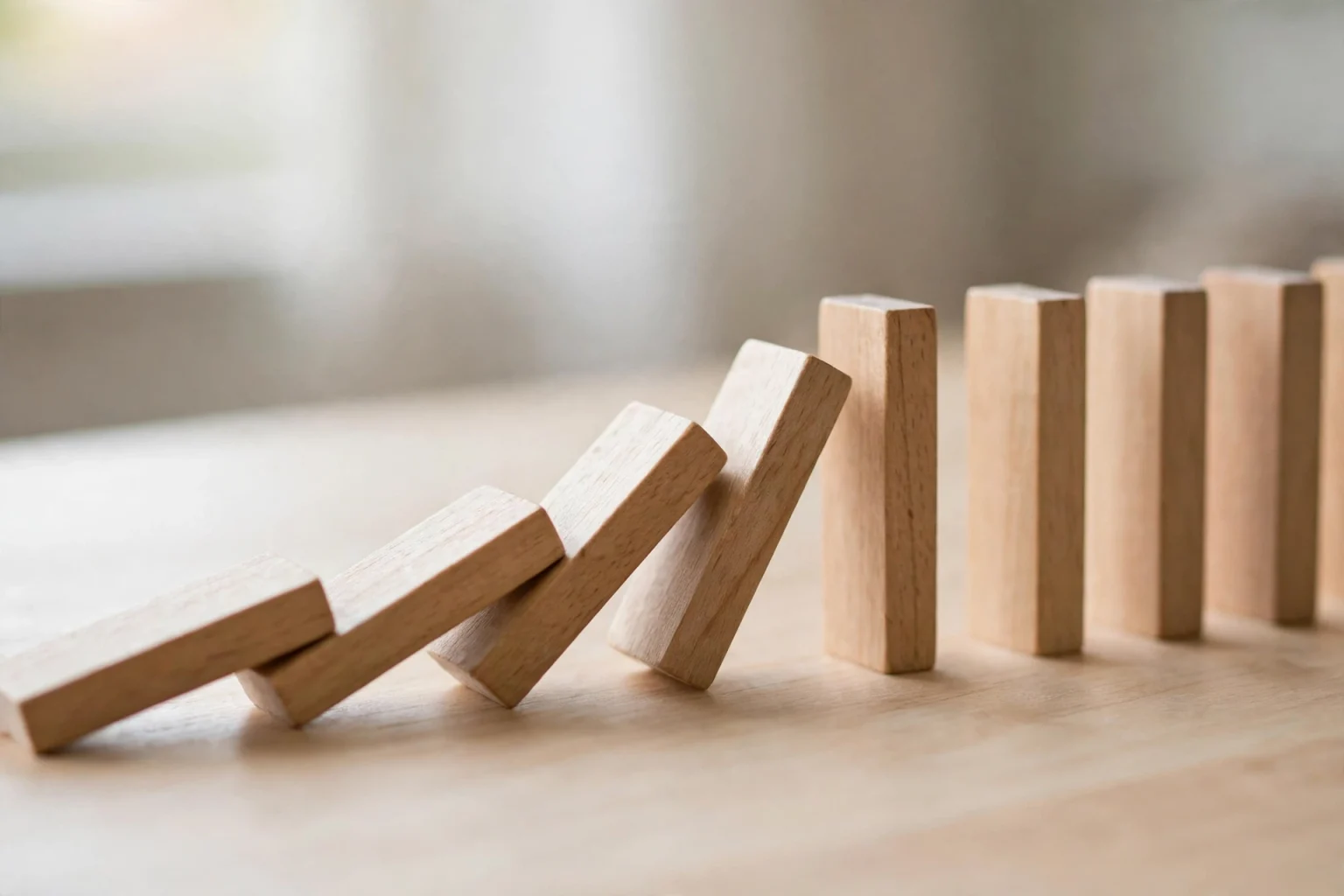
A cause and effect essay does not list facts. It traces a chain: this happened, so that happened, and that led to something else. The best ones pick a chain with at least two links — a cause, an intermediate effect, and a final consequence — because a single link (“phones cause bad sleep”) is too thin to fill an essay, while a chain (“phones at night → later sleep → worse concentration → lower grades”) gives you a paragraph for each step.
Before you pick a topic from this list, run the chain test: can you name the cause, the step in the middle, and the final effect, and can you prove each link with an example or a fact? If you can, you have an essay. If you cannot, keep looking — the topic is either too broad or too thin.
Each topic below comes with an angle (the argument to make) and a chain (the links to prove). Use them as planning material, not as sentences to copy: your essay should be written in your own words, with your own examples.
How to build your chain
A strong cause and effect essay follows a simple structure:
- Introduction — name the effect that interests you, and state your thesis: which cause (or chain of causes) explains it.
- One link per paragraph — each body paragraph proves one step in the chain, with an example or evidence.
- The strongest link last — put your most convincing evidence in the final body paragraph, just before the conclusion.
- Conclusion — restate the chain in one sentence, and say why it matters: what should change, or what the reader should understand differently.
For the thesis itself, see Thesis Statement vs Topic Sentence: The Difference, With Examples and a Quick Test. For a companion list in a different essay form, see 150 Expository Essay Topics for 2026 — With the Angle and the Explaining Question for Each.

Education and school (1–15)
- Why homework loads keep rising — and what they do to sleep. Angle: more homework does not mean more learning when it eats into sleep. Chain: heavier homework → later bedtimes → shorter sleep → weaker memory the next day.
- The effect of phone bans in schools on concentration. Angle: bans help only when they change habits, not just rules. Chain: phones out of reach → fewer interruptions → longer focus → better classwork.
- How AI chatbots changed the way students revise. Angle: instant answers speed up revision but weaken recall. Chain: chatbot answers → less struggle to remember → weaker long-term memory → lower exam performance.
- Why class sizes affect learning more than new textbooks. Angle: attention is the scarcest resource in a classroom. Chain: smaller classes → more teacher time per student → faster feedback → fewer gaps in understanding.
- The effect of starting school later in the morning. Angle: teenagers’ body clocks make early starts a learning problem, not a discipline problem. Chain: later start → more sleep → better morning alertness → higher grades.
- How exam pressure affects teenagers’ mental health. Angle: pressure helps in small doses and harms in large ones. Chain: high-stakes exams → constant anxiety → poor sleep and low mood → worse performance, not better.
- Why some students cheat — and what cheating costs them. Angle: cheating is usually a symptom of pressure, and it costs more than it saves. Chain: fear of failure → cheating → missed learning → failure later, when help is gone.
- The effect of free school meals on attendance. Angle: a free meal is an attendance policy as much as a nutrition policy. Chain: free meals → fewer hungry mornings → better attendance → better learning.
- How group projects build (or break) teamwork skills. Angle: group work teaches teamwork only when roles are real. Chain: clear roles → shared responsibility → genuine cooperation → skills employers want.
- Why teachers leave the profession — and what schools lose. Angle: workload, not pay alone, drives teachers out. Chain: heavy marking and admin → burnout → experienced teachers leave → students lose continuity.
- The effect of online learning on student motivation. Angle: online learning rewards self-discipline and punishes its absence. Chain: no classroom routine → less structure → lower motivation → falling completion rates.
- How school uniforms affect discipline and identity. Angle: uniforms reduce visible inequality but also reduce self-expression. Chain: uniforms → less peer pressure over clothes → calmer mornings → fewer conflicts, but weaker identity.
- Why reading for pleasure is falling — and what it costs. Angle: screens did not kill reading; busy schedules and short-form habits did. Chain: less free reading → smaller vocabulary → weaker writing → lower grades across subjects.
- The effect of part-time jobs on school grades. Angle: a few hours help; too many hurt. Chain: part-time work → less study time → tiredness in class → falling grades when hours rise above a limit.
- How bullying changes a student’s whole school career. Angle: bullying is an academic problem, not only a social one. Chain: bullying → fear of school → absence and avoidance → falling grades and lost confidence.
Technology and AI (16–30)
- How social media algorithms shape what teenagers believe. Angle: the algorithm is an editor that never explains its choices. Chain: engagement-based feeds → extreme content promoted → narrower views → stronger opinions, weaker evidence.
- The effect of AI writing tools on students’ writing skills. Angle: AI drafts faster, but the skill is in the struggle. Chain: AI writes the first draft → less practice planning → weaker independent writing → dependence on the tool.
- Why deepfake videos are a problem for trust in news. Angle: deepfakes damage trust even when they are exposed. Chain: realistic fakes → doubt about real footage → “everything could be fake” → weaker shared truth.
- How screen time before bed affects sleep quality. Angle: the light matters less than the stimulation. Chain: late scrolling → delayed sleep → shorter, lighter sleep → tired mornings.
- The effect of contactless payments on how much we spend. Angle: removing friction removes the pause that stops spending. Chain: tap to pay → no cash counted → less awareness → higher spending.
- Why video games improve some skills and harm others. Angle: the effect depends on the game and the hours. Chain: strategy games → better planning and teamwork; excessive play → less sleep and exercise → poorer health.
- How GPS and maps changed our sense of direction. Angle: navigation apps outsourced a skill our brains used to practise. Chain: turn-by-turn directions → no need to remember routes → weaker spatial memory → dependence on the phone.
- The effect of remote work on city centres. Angle: offices empty, and the businesses that served them follow. Chain: working from home → fewer commuters → less lunchtime trade → shops and cafés close.
- Why data breaches make people distrust online services. Angle: one breach changes behaviour across many services. Chain: personal data leaked → fear of fraud → fewer sign-ups → slower growth for honest services too.
- How smartphones changed family conversation at home. Angle: the phone is present even when nobody is using it. Chain: phones at the table → divided attention → shorter conversations → weaker family connection.
- The effect of streaming on the music and film industries. Angle: streaming made access cheap and ownership rare. Chain: subscriptions replace purchases → artists earn per stream → income depends on volume → shorter songs and safer films.
- Why misinformation spreads faster than corrections. Angle: falsehoods are built to be shared; corrections are built to be accurate. Chain: emotional claims → quick shares → wide reach; corrections arrive late and travel slowly.
- How wearable fitness trackers change exercise habits. Angle: measurement motivates — until it becomes an obsession. Chain: step counts visible → daily goals → more walking; but also anxiety when goals are missed.
- The effect of self-checkouts on jobs in shops. Angle: self-checkouts cut queues and cut roles. Chain: machines replace tills → fewer cashier jobs → remaining staff handle problems, not customers.
- Why AI customer service frustrates — and when it helps. Angle: chatbots are good at simple tasks and terrible at unusual ones. Chain: automated replies → fast answers for common questions → long loops for real problems → customer anger.
Health and wellbeing (31–45)
- How lack of sleep affects memory and mood. Angle: sleep is when memory is filed, not when the brain switches off. Chain: short sleep → weaker memory consolidation → poor recall → worse mood and grades.
- The effect of regular exercise on exam performance. Angle: exercise is a study tool, not a break from studying. Chain: regular exercise → better sleep and mood → sharper concentration → higher scores.
- Why sugary drinks are linked to weight gain in teenagers. Angle: liquid sugar does not fill you up, so it adds calories without reducing hunger. Chain: sugary drinks → extra calories → no feeling of fullness → overeating → weight gain.
- How loneliness affects physical health in older people. Angle: loneliness is a health risk, not just a feeling. Chain: isolation → less activity and worse diet → weaker immunity → more illness.
- The effect of social media on body image. Angle: comparison is the mechanism, not the platform. Chain: edited photos → unrealistic comparisons → lower self-esteem → disordered eating in some teenagers.
- Why vaping rose so fast among young people. Angle: flavours and social media did the marketing that advertising could not. Chain: sweet flavours + online trends → vaping looks harmless → rapid uptake → nicotine addiction.
- How walking to school improves children’s attention. Angle: the walk is exercise in disguise. Chain: active travel → morning movement → better blood flow and alertness → stronger first lessons.
- The effect of caffeine on teenage sleep. Angle: caffeine’s half-life is longer than teenagers expect. Chain: afternoon energy drinks → caffeine still active at night → delayed sleep → tired mornings.
- Why stress makes people eat more — or stop eating. Angle: stress changes appetite in opposite directions for different people. Chain: stress hormones → cravings for sugar and fat, or loss of appetite → unstable eating → weight and mood problems.
- How team sport builds confidence in shy teenagers. Angle: belonging comes before confidence. Chain: regular team practice → shared goals → friendships → confidence that spreads to class.
- The effect of air pollution on children’s lungs. Angle: children’s lungs are still growing, so the damage lasts longer. Chain: traffic fumes → irritated airways → more asthma → missed school and weaker fitness.
- Why mental health days in schools matter. Angle: a day off is prevention, not indulgence. Chain: recognised mental health days → earlier help → less crisis → better long-term attendance.
- How skipping breakfast affects concentration. Angle: the brain runs on glucose, and it has been fasting all night. Chain: no breakfast → low blood sugar → wandering attention → weaker morning lessons.
- The effect of gaming late at night on next-day mood. Angle: the game is not the problem; the lost sleep is. Chain: late gaming → short sleep → irritability → conflict at home and school.
- Why handwriting notes beats typing for memory. Angle: writing slowly forces you to choose what matters. Chain: handwriting → slower, selective notes → deeper processing → better recall in exams.
Environment and climate (46–60)
- How single-use plastic ends up in the ocean. Angle: the journey from bin to beach is shorter than people think. Chain: plastic litter → wind and rivers → the sea → harm to wildlife that mistakes it for food.
- The effect of deforestation on rainfall and wildlife. Angle: forests make their own rain. Chain: trees cleared → less moisture returned to the air → less rain → drier land and lost habitat.
- Why fast fashion is bad for the planet — and for workers. Angle: cheap clothes are cheap because someone else pays. Chain: fast production → low wages and waste → clothes discarded quickly → landfill and pollution.
- How electric cars change city air quality. Angle: the benefit is local and immediate. Chain: fewer exhaust pipes → less nitrogen dioxide → cleaner street air → fewer breathing problems.
- The effect of food waste on climate change. Angle: wasted food is wasted farming. Chain: food thrown away → methane from landfill → greenhouse gases → faster warming.
- Why bees are declining — and why it matters for food. Angle: a third of our food depends on pollinators. Chain: pesticides and habitat loss → fewer bees → less pollination → lower crop yields.
- How recycling actually works (and when it doesn’t). Angle: recycling is a market, not magic. Chain: sorted waste → sold to processors → new products; contaminated loads are rejected and landfilled.
- The effect of hotter summers on farming. Angle: heat changes when crops grow, not just how much. Chain: hotter summers → earlier harvests → new pests → lower yields for some crops.
- Why people fly more even as they worry about climate. Angle: cheap flights beat good intentions. Chain: low-cost airlines → flying feels normal → more trips → rising aviation emissions.
- How planting trees in cities cools streets. Angle: shade and evaporation are free air conditioning. Chain: street trees → shade and moisture → lower temperatures → less heat illness.
- The effect of water shortages on farming communities. Angle: a dry season becomes a debt problem. Chain: less rain → lower yields → less income → debt and migration.
- Why renewable energy is getting cheaper. Angle: scale and learning drive the price down. Chain: more solar panels made → cheaper manufacturing → lower prices → more adoption.
- How overfishing empties the seas. Angle: nets do not distinguish between young fish and adults. Chain: overfishing → fewer breeding fish → smaller catches → fishing communities collapse.
- The effect of wildfires on air quality hundreds of miles away. Angle: smoke does not respect borders. Chain: wildfire smoke → fine particles travel → poor air far away → breathing problems in distant cities.
- Why composting cuts household waste so much. Angle: food is the heaviest thing in the bin. Chain: food scraps composted → less landfill → less methane → smaller waste bills.
Society and community (61–75)
- How volunteering changes the volunteer, not just the cause. Angle: the giver gains skills and confidence, not only the receiver. Chain: regular volunteering → new skills → stronger CV and self-belief → better job chances.
- The effect of library closures on a neighbourhood. Angle: a library is childcare, job help and a warm room, not just books. Chain: library closes → fewer free services → isolated residents → weaker community.
- Why public transport fares decide who can reach a job. Angle: a fare is a barrier, not just a price. Chain: high fares → unaffordable commutes → fewer job options → longer unemployment.
- How neighbourhood watch schemes change crime rates. Angle: watching works by raising the risk of being seen. Chain: visible neighbours → burglars choose easier streets → fewer break-ins → stronger trust.
- The effect of loneliness on community health. Angle: loneliness is contagious through a community, not only an individual problem. Chain: isolated residents → less participation → weaker networks → poorer health for everyone.
- Why youth clubs reduce antisocial behaviour. Angle: boredom is the raw material of trouble. Chain: free evening activities → fewer bored teenagers on streets → fewer incidents → safer neighbourhoods.
- How immigration changes a town’s food, language and festivals. Angle: change is visible first in shops and kitchens. Chain: new arrivals → new shops and restaurants → new festivals → a changed, richer local culture.
- The effect of gentrification on long-time residents. Angle: improvement for the area can mean displacement for its people. Chain: rising prices → higher rents → long-time residents leave → community ties break.
- Why community gardens improve mental health. Angle: gardening gives routine, daylight and company at once. Chain: shared plots → regular outdoor activity → social contact → lower stress.
- How a new supermarket changes small high streets. Angle: the supermarket brings convenience and takes trade. Chain: big store opens → shoppers switch → small shops lose income → some close.
- The effect of affordable housing shortages on families. Angle: housing costs decide where children grow up. Chain: few affordable homes → long commutes or overcrowding → stressed families → worse school outcomes.
- Why people trust local news more than national news. Angle: local news can be checked against daily life. Chain: local reporters known → stories verifiable → higher trust → stronger community debate.
- How sports clubs keep teenagers out of trouble. Angle: a team gives identity and a timetable. Chain: regular training → belonging and discipline → less free time for trouble → better school results.
- The effect of longer working hours on family life. Angle: hours are taken from evenings, not from sleep alone. Chain: longer days → missed dinners → less time with children → weaker relationships.
- Why neighbour disputes escalate — and how mediation helps. Angle: small grievances grow when nobody talks. Chain: noise or boundary row → silence and resentment → retaliation → a feud mediation could have stopped.
Economy and work (76–90)
- How minimum wage rises affect small businesses. Angle: the effect depends on whether customers can pay more. Chain: higher wages → higher costs → higher prices or fewer hours → mixed results for workers.
- The effect of automation on factory jobs. Angle: machines replace tasks, not whole jobs — at first. Chain: automation → routine tasks done by machines → workers move to supervision → retraining decides who wins.
- Why the gig economy appeals to young workers — and what it costs. Angle: flexibility is real, and so is the insecurity. Chain: gig work → choose your hours → no sick pay or pension → financial fragility.
- How student debt shapes career choices. Angle: debt makes safe jobs rational. Chain: large loans → need for quick income → graduates avoid low-paid vocations → teacher and charity shortages.
- The effect of working from home on productivity. Angle: fewer interruptions help focus, but isolation hurts collaboration. Chain: home working → deeper focus on solo tasks → weaker team ideas → mixed overall output.
- Why small shops close when big chains arrive. Angle: the chain’s advantage is buying power, not quality. Chain: chain opens → lower prices → small shops lose sales → closures → less choice.
- How inflation changes what families buy first. Angle: families cut treats before essentials, and the order matters. Chain: rising prices → tighter budgets → luxuries cut first → small businesses feel it before supermarkets.
- The effect of free trade on local farmers. Angle: cheap imports help shoppers and hurt producers. Chain: imports arrive → lower food prices → local farmers undercut → rural jobs lost.
- Why the four-day week is gaining supporters. Angle: the argument is about output, not hours. Chain: shorter week → rested workers → same or better output → happier staff, lower turnover.
- How unpaid internships limit who can enter top careers. Angle: free work is a filter for wealth. Chain: unpaid roles → only the well-off can afford them → narrower talent pool → less diversity at the top.
- The effect of tourism on local house prices. Angle: visitors bid for the same homes as residents. Chain: holiday lets grow → fewer homes for locals → higher rents → workers leave the area.
- Why side hustles are now normal for young workers. Angle: one wage no longer covers one life. Chain: rising costs → main job insufficient → side income needed → less free time and more stress.
- How childcare costs affect mothers’ careers. Angle: childcare is a career decision, not a family extra. Chain: high fees → work pays little after childcare → mothers pause careers → long-term pay gap.
- The effect of a recession on young people’s first jobs. Angle: a bad start leaves a long scar. Chain: recession → fewer entry jobs → graduates take lower roles → lower pay for years after.
- Why cashless shops exclude some customers. Angle: digital payment assumes a bank account and a charged phone. Chain: cash refused → unbanked customers excluded → lost sales and unfairness.
Media and communication (91–105)
- How headlines shape what readers believe before they read. Angle: the headline is the argument most people actually see. Chain: emotive headline → instant impression → few read the article → opinion formed on a sentence.
- The effect of 24-hour news on public anxiety. Angle: constant updates make rare events feel constant. Chain: rolling news → repeated images of danger → overestimated risk → chronic anxiety.
- Why podcasts replaced radio for many young listeners. Angle: choice and control beat schedules. Chain: on-demand audio → listen when you want → loyalty to hosts → radio’s audience shrinks.
- How memes spread political ideas faster than speeches. Angle: humour travels where argument cannot. Chain: funny image → easy sharing → wide reach → ideas absorbed without debate.
- The effect of adverts on children’s food choices. Angle: children cannot tell persuasion from information. Chain: cartoon mascots → pester power → sugary purchases → unhealthy diets.
- Why influencers change what teenagers buy. Angle: trust is the product being sold. Chain: influencer recommends → followers trust the person → purchases follow → brands pay for access.
- How streaming changed how we watch TV together. Angle: choice ended the shared schedule. Chain: everyone picks their own show → fewer shared evenings → less common conversation.
- The effect of comment sections on public debate. Angle: anonymity lowers the cost of cruelty. Chain: anonymous comments → harsher language → reasonable voices leave → debate degrades.
- Why fake reviews distort what people buy. Angle: five stars can be bought, and shoppers know it. Chain: fake reviews → inflated ratings → bad purchases → distrust of all reviews.
- How short video apps changed attention spans. Angle: the feed trains the brain to expect novelty every few seconds. Chain: rapid clips → shorter focus → books feel slow → less deep reading.
- The effect of paywalls on access to news. Angle: quality journalism costs money, and the bill falls on readers. Chain: paywalls → fewer free readers → informed public shrinks → misinformation fills the gap.
- Why some news stories go viral and others don’t. Angle: emotion, not importance, decides virality. Chain: surprising or angry story → shares → algorithm boosts → millions see it.
- How subtitles changed how we watch foreign films. Angle: subtitles turned foreign film into a normal choice. Chain: easy subtitles → wider audiences → more translations → global film culture.
- The effect of cancel culture on public figures. Angle: the punishment is instant and often permanent. Chain: old posts resurface → online outrage → sponsors withdraw → careers end without a hearing.
- Why people trust a friend’s recommendation over an advert. Angle: a friend has nothing to gain. Chain: personal recommendation → perceived honesty → higher trust → purchase follows.
Science and everyday life (106–120)
- How vaccines train the immune system — and why herd immunity matters. Angle: a vaccine is a rehearsal, not a cure. Chain: weakened germ introduced → immune memory formed → real infection met with defence → community protected.
- The effect of light pollution on sleep and wildlife. Angle: darkness is a habitat, not an absence. Chain: bright nights → confused body clocks → poor sleep in people, disoriented animals.
- Why we forget names but remember faces. Angle: faces are recognised as patterns; names are arbitrary labels. Chain: face seen → pattern matched; name heard → no pattern to match → forgotten faster.
- How seatbelts changed road death rates. Angle: a simple device works by spreading force. Chain: seatbelt law → higher use → fewer ejections → far fewer deaths.
- The effect of music on concentration while studying. Angle: familiar music helps; new lyrics hurt. Chain: known tunes → mood lifted → better focus; unfamiliar lyrics → divided attention → worse recall.
- Why we crave sugar — and how the brain rewards it. Angle: the craving is ancient; the supply is new. Chain: sweet taste → dopamine reward → habit formed → overconsumption in a world of cheap sugar.
- How antibiotics lose their power when overused. Angle: every use is a selection event. Chain: antibiotics overused → resistant bacteria survive → infections harder to treat → longer illness.
- The effect of cold weather on mood and energy. Angle: light, not temperature, is the main driver. Chain: short days → less sunlight → lower serotonin → low mood and tiredness.
- Why we dream — and what dreams do for memory. Angle: dreams are the brain sorting the day. Chain: sleep cycles → dreams replay experiences → memories strengthened → better learning.
- How fingerprints became evidence in criminal cases. Angle: a pattern that never repeats is a perfect identifier. Chain: unique prints → reliable matching → convictions based on evidence → fewer wrongful arrests.
- The effect of sugar taxes on soft drink sales. Angle: price changes behaviour faster than advice. Chain: tax raises price → shoppers switch → sales of sugary drinks fall → manufacturers cut sugar.
- Why left-handed people were once forced to switch hands. Angle: superstition became school policy. Chain: left hand seen as wrong → children forced to write right-handed → stress and poor handwriting.
- How the placebo effect works in medicine. Angle: belief changes the body’s chemistry, not just the mind. Chain: expectation of healing → real chemical changes → symptoms improve → recovery feels faster.
- The effect of regular sleep on immune strength. Angle: the immune system works the night shift. Chain: regular sleep → immune cells produced → stronger defence → fewer colds.
- Why we yawn — and why yawning is contagious. Angle: yawning cools the brain and signals the group. Chain: tiredness → yawn → others see it → their brains copy the signal.
Politics and law (121–135)
- How voting age affects which issues parties care about. Angle: parties chase the voters who exist, not the ones who might. Chain: voting age lowered → young voters matter → parties address housing and climate.
- The effect of compulsory voting on election turnout. Angle: compulsion changes who votes, not only how many. Chain: voting required → poorer and younger citizens vote → results reflect the whole population.
- Why voter ID laws change who can vote. Angle: a small requirement can be a large barrier. Chain: ID required → some lack ID → fewer votes from poorer citizens → skewed results.
- How social media changed election campaigning. Angle: campaigns now speak to individuals, not crowds. Chain: targeted adverts → personalised messages → voters in bubbles → harder shared debate.
- The effect of term limits on political leadership. Angle: limits prevent entrenchment but also remove experience. Chain: leaders must leave → fresh faces arrive → less expertise, more turnover.
- Why some countries ban plastic bags — and what happens next. Angle: a ban works when alternatives are ready. Chain: bags banned → shoppers bring their own → less litter → manufacturers switch products.
- How CCTV in public places affects crime and privacy. Angle: cameras deter some crimes and record all of them. Chain: cameras installed → street crime falls → citizens accept being watched → privacy quietly shrinks.
- The effect of free school meals policy on child poverty. Angle: a meal is the most direct anti-poverty measure in a school. Chain: free meals → children fed → better learning → narrower attainment gap.
- Why referendums divide countries long after the vote. Angle: a binary vote cannot hold a complex argument. Chain: yes/no question → winners and losers fixed → debate continues → division persists.
- How jury trials depend on ordinary citizens. Angle: the jury is democracy inside the courtroom. Chain: random citizens chosen → community judgement → public trust in verdicts → justice seen to be done.
- The effect of tax on sugary drinks on public health. Angle: the tax works twice — it changes shopping and recipes. Chain: price rises → fewer purchases; manufacturers cut sugar → population consumes less.
- Why whistleblowers risk everything to speak out. Angle: conscience outweighs career when the wrong is big enough. Chain: wrongdoing seen → silence feels complicit → disclosure → career risk, but public benefit.
- How protest movements change laws. Angle: protest works by making an issue impossible to ignore. Chain: marches and media → public attention → political pressure → legislation follows.
- The effect of prison education programmes on reoffending. Angle: skills are the alternative to crime. Chain: education in prison → qualifications on release → jobs available → lower reoffending.
- Why press freedom matters for fighting corruption. Angle: sunlight is the cheapest anti-corruption tool. Chain: free press investigates → corruption exposed → public outrage → officials removed.
Culture and daily life (136–150)
- How streaming changed how families choose films together. Angle: the argument moved from the TV guide to the algorithm. Chain: endless choice → longer decisions → everyone watches separately → fewer shared films.
- The effect of food delivery apps on local restaurants. Angle: the app takes a cut of every order. Chain: delivery apps grow → restaurants depend on them → commission eats margins → some close.
- Why we keep photos we never look at. Angle: storage is free, so deleting feels wasteful. Chain: thousands of photos stored → none revisited → memories unorganised → nostalgia without recall.
- How festivals bring a town’s economy alive. Angle: a festival is a week of trade compressed into days. Chain: visitors arrive → hotels and cafés fill → local makers sell → the town’s name spreads.
- The effect of second-hand shopping on waste. Angle: reuse is the most effective recycling. Chain: clothes resold → fewer new items bought → less production → less waste.
- Why we remember songs from our teenage years best. Angle: music binds to identity when identity is forming. Chain: teenage years → strong emotions → songs linked to memories → lifelong recall.
- How remote work changed what “home” means. Angle: home is now an office, a school and a refuge at once. Chain: work moves home → rooms multitask → boundaries blur → people redesign their space.
- The effect of dating apps on how people meet. Angle: choice expanded and commitment thinned. Chain: endless profiles → quick judgements → more first dates, fewer second ones.
- Why board games are popular again. Angle: screens made the table attractive again. Chain: digital fatigue → desire for face-to-face play → board game cafés grow → families play together.
- How a daily walk changes mood and thinking. Angle: movement is the cheapest mood medicine. Chain: daily walk → fresh air and light → clearer thinking → better mood.
- The effect of decluttering on stress levels. Angle: clutter is a list of unfinished decisions. Chain: mess removed → fewer visual reminders → calmer mind → easier focus.
- Why people collect things they don’t need. Angle: collecting is about the hunt, not the object. Chain: search and find → small reward → collection grows → identity attached to objects.
- How cooking at home changes family eating habits. Angle: cooking controls the ingredients and the timetable. Chain: home cooking → healthier meals → shared mealtimes → stronger family routines.
- The effect of learning a second language on the brain. Angle: two languages are a daily workout for the brain. Chain: switching languages → stronger attention control → delayed cognitive decline.
- Why handwritten letters feel more personal than messages. Angle: effort is the message. Chain: handwriting takes time → the reader feels the effort → the letter feels personal → it is kept, not deleted.
Choosing your topic: three quick tests
- The chain test. Can you name the cause, the middle link and the final effect? If you cannot, the topic is too vague.
- The evidence test. Can you find one real example, statistic or case for each link? A chain without evidence is an opinion.
- The “so what” test. Does your final effect matter to someone? If the chain ends in nothing important, pick a topic whose ending matters.
Frequently asked questions
What is a cause and effect essay?
An essay that explains why something happened (the cause) and what followed (the effect), usually as a chain of linked steps rather than a single cause and a single result.
How long should a cause and effect essay be?
For school and college work, 500–1,000 words is typical: an introduction, one paragraph per link in the chain, and a conclusion. The length should fit the chain — a two-link chain needs fewer words than a four-link one.
What is the difference between a cause and effect essay and an expository essay?
A cause and effect essay explains a chain of reasons and results. An expository essay explains a topic in general — how something works, what it means, or how to do it. The two overlap, but the cause-and-effect form always follows the chain. For the expository form, see 150 Expository Essay Topics for 2026.
Can a cause and effect essay have more than one cause?
Yes — most real effects have several causes. The cleanest structure is to take one main cause per body paragraph, then show how they combine in the conclusion. Avoid listing five causes with one sentence each; depth beats breadth.
How do I write a thesis statement for a cause and effect essay?
Name the effect and the main cause in one sentence that someone could argue with: “Phone bans improve concentration because they remove the interruptions that break focus” is a thesis; “Phones in schools” is a topic. See the thesis statement versus topic sentence guide for the full method.