




If you have ever wondered whether the sentence you just wrote is a thesis statement or a topic sentence, you are not alone. Both make claims, both sit near the start of something, and both sound important — yet they do two completely different jobs, and mixing them up is one of the fastest ways to lose marks for essay structure.
The good news is that once you see the difference, it becomes hard to unsee. A thesis statement controls your whole essay. A topic sentence controls one paragraph. Everything else — where each one goes, how many you need, and what happens when you get them wrong — follows from that single idea.
This guide explains the difference in plain terms, with a comparison table, worked examples for three essay types, the four most common mistakes, and a five-question test you can run on any sentence in under a minute.
What Is a Thesis Statement?
A thesis statement is the one sentence that states the main claim of your entire essay. It answers the essay question, takes a clear position or sets out the central idea, and tells the reader exactly what the essay will prove, explain or explore. It appears once, near the end of your introduction, and every paragraph that follows must connect back to it.
A strong thesis statement is specific and arguable (or, in an explanatory essay, clearly focused). It is not a vague announcement such as “This essay will discuss social media” — that tells the reader a topic, not a claim. A real thesis says something, for example: “Social media harms teenagers’ attention spans because its design rewards constant switching, which makes deep reading harder to sustain.”
Notice what that sentence does. It names the topic (social media and attention), takes a position (it harms attention), and gives the reason the essay will develop (design that rewards switching). The whole essay now has a job: prove that claim, step by step.
If you want a refresher on where the thesis sits inside a strong opening, our guide to writing an essay introduction that earns marks walks through the structure paragraph by paragraph.
What Is a Topic Sentence?
A topic sentence is the sentence that states the main idea of one body paragraph. It usually comes first in the paragraph, and it tells the reader what that single paragraph will do. Its job is narrower: it makes one point that supports the thesis, and the rest of the paragraph develops that point with evidence, explanation or examples.
Think of it this way. If the thesis statement is the claim of the whole essay, each topic sentence is a smaller claim that helps prove it. A good topic sentence is specific enough to guide a paragraph but limited enough that one paragraph can actually cover it.
For example, in the social media essay above, a topic sentence for the first body paragraph might be: “Social media platforms are designed to interrupt attention with notifications, autoplay and infinite scrolling.” That sentence does not try to prove the whole thesis. It makes one point — the design interrupts attention — and the paragraph then shows how notifications, autoplay and infinite scroll do exactly that.
Thesis Statement vs Topic Sentence: A Comparison Table
The fastest way to fix the difference in your mind is to compare them side by side.
| Feature | Thesis statement | Topic sentence |
|---|---|---|
| Position | Near the end of the introduction | At the start of a body paragraph (usually the first sentence) |
| Scope | The whole essay | One paragraph only |
| Job | States the essay’s main claim and what it will prove | States the paragraph’s main point and how it supports the thesis |
| How many per essay | One | One per body paragraph (so usually three or more) |
| What it answers | The essay question | One part of the thesis |
| Example | “Social media harms teenagers’ attention spans because its design rewards constant switching, which makes deep reading harder to sustain.” | “Social media platforms are designed to interrupt attention with notifications, autoplay and infinite scrolling.” |
Read the example row carefully. The thesis makes the big claim; the topic sentence makes one piece of it. Neither sentence can do the other’s job. A thesis is too broad for a single paragraph, and a topic sentence is too narrow to carry an essay.
Worked Examples: One Thesis, Three Matching Topic Sentences
Below are three short worked examples — one argumentative essay, one literary analysis and one explanatory essay. Each shows a thesis statement followed by its matching topic sentences. These are example sentences only, not paragraphs or essays.
Example 1: An Argumentative Essay
Essay question: Should schools ban mobile phones during the school day?
Thesis statement: “Schools should ban mobile phones during the school day because phones distract students in lessons, increase bullying on messaging apps, and make it harder for students to build face-to-face social skills.”
Matching topic sentences:
- “Mobile phones distract students during lessons because notifications and messages constantly pull their attention away from the teacher.”
- “Messaging apps give bullying a private channel that follows students into every classroom and corridor.”
- “When students spend breaks on their phones, they get fewer chances to practise the face-to-face conversations that build social confidence.”
Each topic sentence takes one reason from the thesis — distraction, bullying, social skills — and turns it into a paragraph. Together, the three paragraphs prove the thesis.
Example 2: A Literary Analysis Essay
Essay question: How does Shakespeare present the theme of ambition in Macbeth?
Thesis statement: “Shakespeare presents ambition in Macbeth as a force that begins as private desire, is sharpened by outside influence, and finally destroys the person it once promised to reward.”
Matching topic sentences:
- “Macbeth’s ambition begins as a private thought, something he imagines but is afraid to act on.”
- “Lady Macbeth sharpens her husband’s ambition by challenging his courage and turning his desire into a plan.”
- “Once Macbeth has taken the crown, ambition stops rewarding him and begins to destroy his peace of mind, his friendships and his rule.”
Again, the pattern holds: one thesis, three topic sentences, each covering one stage of the argument. The same structure works for plays, novels and poems — the thesis states your reading of the text, and each topic sentence develops one part of it.
Example 3: An Explanatory Essay
Essay question: Why do seasons change?
Thesis statement: “Seasons change because the Earth’s tilted axis means different parts of the planet receive different amounts of direct sunlight at different times of the year.”
Matching topic sentences:
- “The Earth’s axis is tilted by about 23.5 degrees, and this tilt stays fixed as the planet orbits the Sun.”
- “When one hemisphere tilts towards the Sun, it receives more direct sunlight and longer days, which we experience as summer.”
- “Six months later, the same hemisphere tilts away from the Sun, receiving weaker sunlight and shorter days, which we experience as winter.”
Even in an explanatory essay, where the thesis is a focused explanation rather than an opinion, the same logic applies. The thesis statement examples above all do the same work: one claim for the essay, supported by topic sentences that each handle one piece.
How They Work Together
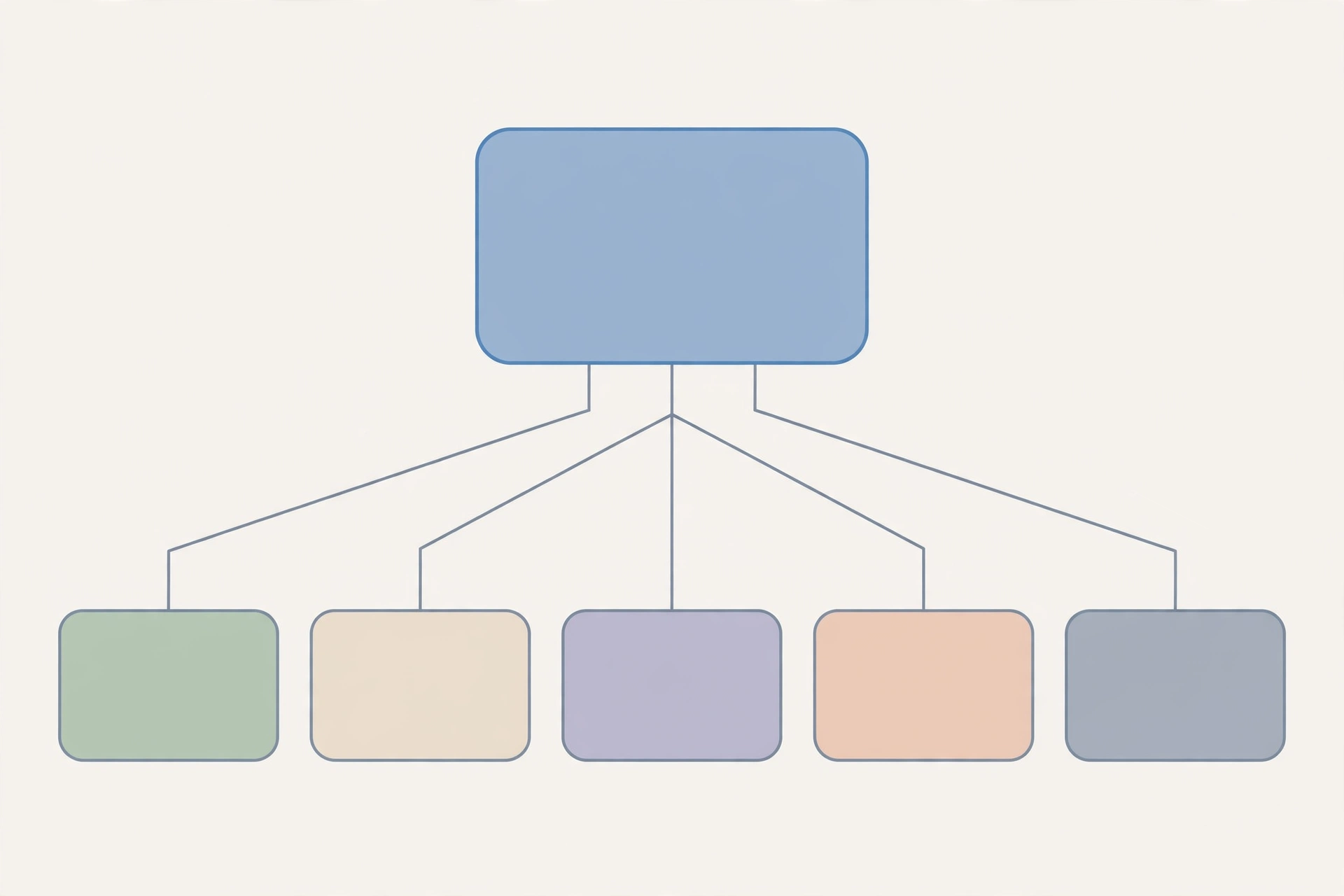
A thesis statement and its topic sentences are not rivals. They are a team, and the relationship runs in one direction: the thesis controls the topic sentences.
Before you write a body paragraph, check its topic sentence against the thesis: does this point prove part of my thesis, or is it a new idea? If it proves part of the thesis, the paragraph belongs. If it is a new idea, either the thesis needs to change or the paragraph needs to go.
This check is also the best way to plan an essay. Once your thesis is written, break it into its parts — usually two or three reasons, stages or features — and turn each part into a topic sentence. That gives you your paragraph plan and keeps the essay structure tight. Our breakdown of the 5-paragraph essay, taken apart shows this plan in action, with each body paragraph doing one clearly defined job.
When the thesis and the topic sentences line up, the reader can follow the argument without effort. The introduction promises a claim, each paragraph delivers one piece of it, and the conclusion gathers the pieces together. When they do not line up, the essay feels scattered — even if every individual paragraph is well written.
4 Common Mistakes to Avoid
Most thesis statement vs topic sentence problems come from four mistakes. They are easy to spot once you know them, and easy to fix.
1. A Topic Sentence That Just Repeats the Thesis
The mistake: Every body paragraph opens with a restated version of the thesis, so the essay says the same thing four times instead of developing an argument.
Why it hurts: The reader learns nothing new, and the paragraphs have no distinct job.
The fix: Make each topic sentence narrower than the thesis. It should cover one reason, one stage or one feature — not the whole claim.
2. A Topic Sentence That Is Just a Fact
The mistake: The paragraph opens with a fact — “Shakespeare wrote Macbeth in 1606” or “The Earth orbits the Sun once a year” — instead of a point.
Why it hurts: A fact is not an argument. The reader cannot tell what the paragraph is trying to prove, so the evidence that follows has no direction.
The fix: Turn the fact into a claim: ask what point it supports, put that point in the topic sentence, and use the fact as evidence inside the paragraph.
3. A Thesis Buried in a Body Paragraph
The mistake: The real claim of the essay only appears halfway through, in the middle of a body paragraph, while the introduction contains only background or a vague statement of topic.
Why it hurts: The reader spends the first half of the essay not knowing what it is arguing, and the opening paragraphs drift because nothing is guiding them.
The fix: Move the claim to the end of the introduction, where the thesis belongs. If you discovered your real argument while writing, rewrite the introduction so it states the argument you actually made.
4. A Topic Sentence That Introduces a New Argument
The mistake: A body paragraph opens with a point that has nothing to do with the thesis — a new topic the essay never promised to discuss.
Why it hurts: The essay loses focus, and the reader wonders why this paragraph is here at all.
The fix: Check every topic sentence against the thesis before you write the paragraph. If the point does not support the thesis, cut it or revise the thesis to include it.
A Quick Test: Thesis or Topic Sentence?
Use these five questions on any sentence you are unsure about.
- How much does it cover? If it covers the whole essay, it is a thesis. If it covers one paragraph, it is a topic sentence.
- Where does it sit? A sentence at the end of the introduction is almost certainly a thesis. A sentence at the start of a body paragraph is almost certainly a topic sentence.
- How many are there? There should be one thesis per essay and one topic sentence per body paragraph. If you already have a thesis, the sentence in front of you is probably a topic sentence.
- Can one paragraph prove it? If a single paragraph of evidence can cover it, it is a topic sentence. If it would take the whole essay, it is a thesis.
- Does it depend on a bigger claim? A topic sentence only makes sense as part of a thesis — it proves one piece of it. A thesis stands on its own as the essay’s main claim.
Run the test whenever you plan or revise an essay. It takes less than a minute, and it catches most essay structure problems before they reach the page.
FAQ
What is a thesis statement in simple terms?
A thesis statement is the one sentence in your introduction that states the main claim of your whole essay. It answers the essay question and tells the reader what the essay will prove or explain.
What is a topic sentence in simple terms?
A topic sentence is the sentence at the start of a body paragraph that states the main point of that paragraph. It covers one idea — one part of the thesis — and the rest of the paragraph develops it with evidence or explanation.
Can a thesis statement and a topic sentence be the same?
No. They do different jobs at different scales. A thesis statement covers the whole essay, while a topic sentence covers one paragraph. A sentence can be one or the other, but not both.
How do I write a topic sentence that supports my thesis?
Break your thesis into its parts — usually two or three reasons, stages or features. Turn each part into a single claim and use it as the topic sentence for one paragraph, then check that the paragraph’s evidence supports that claim.
The Difference in One Sentence
A thesis statement is the claim of your whole essay; a topic sentence is the claim of one paragraph that helps prove it. Learn to tell them apart, and your essay structure will take care of itself.